

|
Campus
Duration
4 Semesters (2 Years)Credential Awarded
Ontario College DiplomaSchool
School of Health SciencesProgram and course delivery
This program is offered in Seneca's hybrid delivery format with some courses available in Seneca's flexible delivery format. Some coursework is online and some must be completed in person. Students will need to come on campus to complete in-person learning requirements. For courses offered in the flexible delivery format, professors use innovative learning spaces and technology to teach students in a classroom or lab and broadcast in real time to students attending remotely. In flexible courses, students have the choice of coming on campus or learning online.
Learn more: Seneca’s program delivery options and how courses in this program will be delivered each term.
About the Program
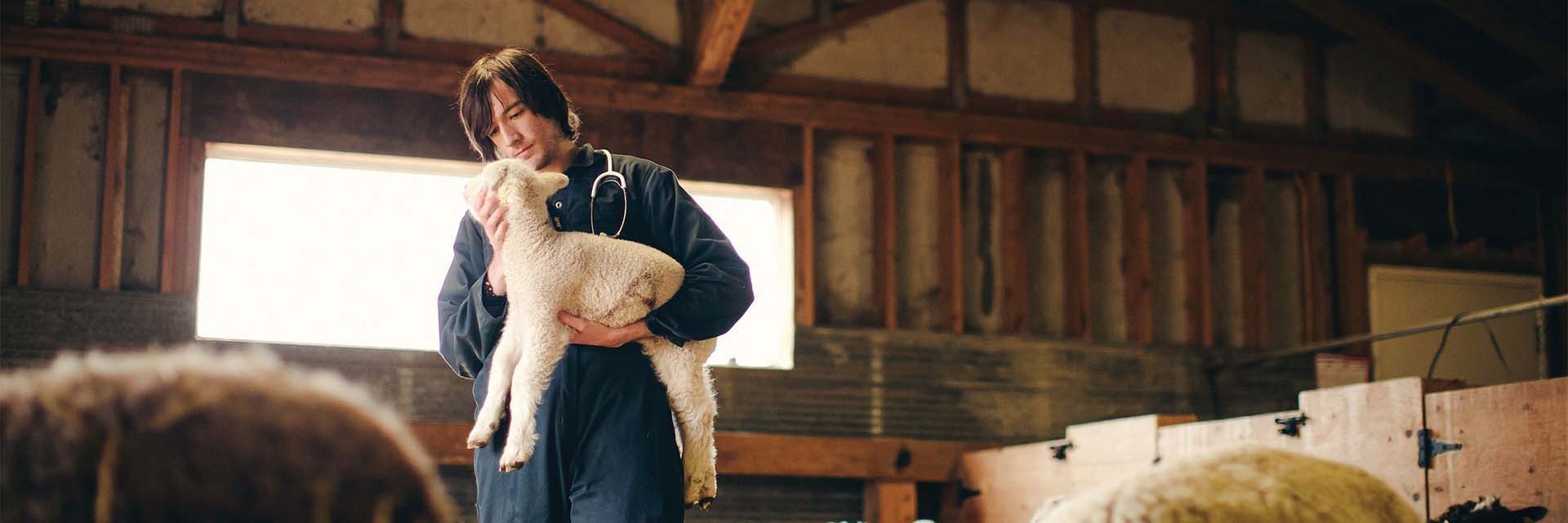
Throughout this two-year diploma program you will gain the knowledge and skills to assist and support veterinary practitioners, public health officers and biomedical research scientists. You will study a variety of subjects, including nutrition, clinical pathology, microbiology, radiography, anatomy, physiology and genetics. These studies will provide you with a strong grasp on animal behaviour, nursing and care. The curriculum is taught by expert faculty who collaborate with students, graduates and industry professionals on applied research projects in the sector. |
To practice in Ontario as a Registered Veterinary Technician (RVT), you must meet and maintain the qualifications set by the Ontario Association of Veterinary Technicians. You must also complete the Veterinary Technician National Examination.
For more information on RVT qualifications, please visit oavt.org.
Work Experience
Field Placement
As a student in this program, if all academic requirements are met, you will have the opportunity to participate in a professional Field Placement for course credit. Field placements take place in a veterinary setting external to the college or your employer. Your first three semesters of the Veterinary Technician program include internal clinical placement shifts in our Animal Health Centre to build proficiency and confidence prior to your external field placement in fourth semester.
Your Career
When you graduate from this program, these are the types of career options you can explore:
Affiliations/Associations
You will also have the opportunity to become affiliated with the following associations:
- Ontario Association of Veterinary Technicians (OAVT)
- Canadian Veterinary Medical Association(CVMA)
- College of Veterinarians of Ontario (CVO)
- Ontario Ministry of Agriculture, Food and Rural Affairs (OMAFRA)
- Canadian Council on Animal Care (CCAC) - Good Animal Practice (GAP) registration
- American Veterinary Medical Association (AVMA)
Global Learning and Engagement Opportunity

As a student in this program you have the chance to explore global learning opportunities through Global Learning and Engagement. Gain a global perspective and develop new skills for personal, professional, and academic growth – at Seneca or abroad.
Student Works and Experiences

View our photo gallery to see what it's like to study veterinary technician.